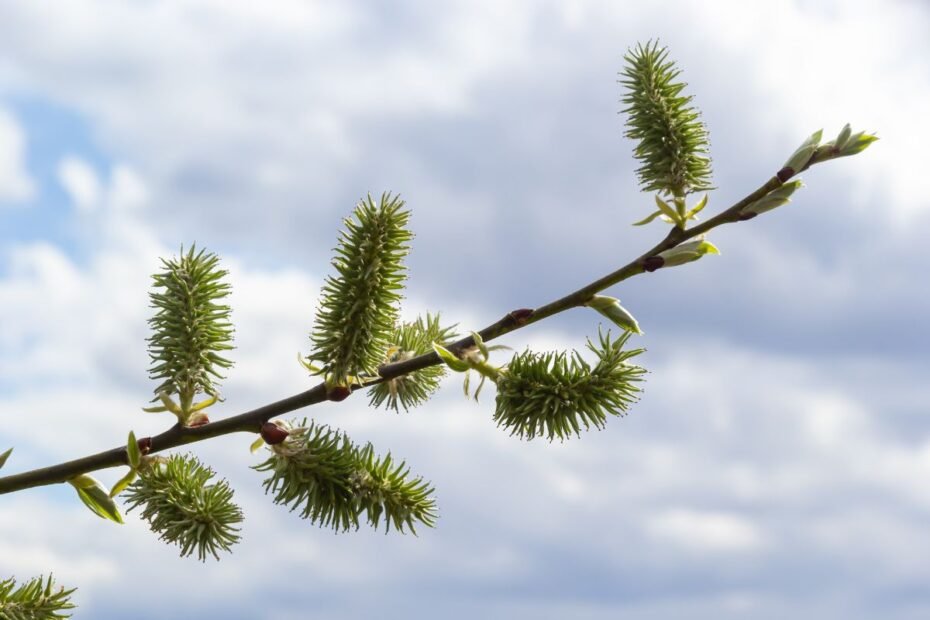
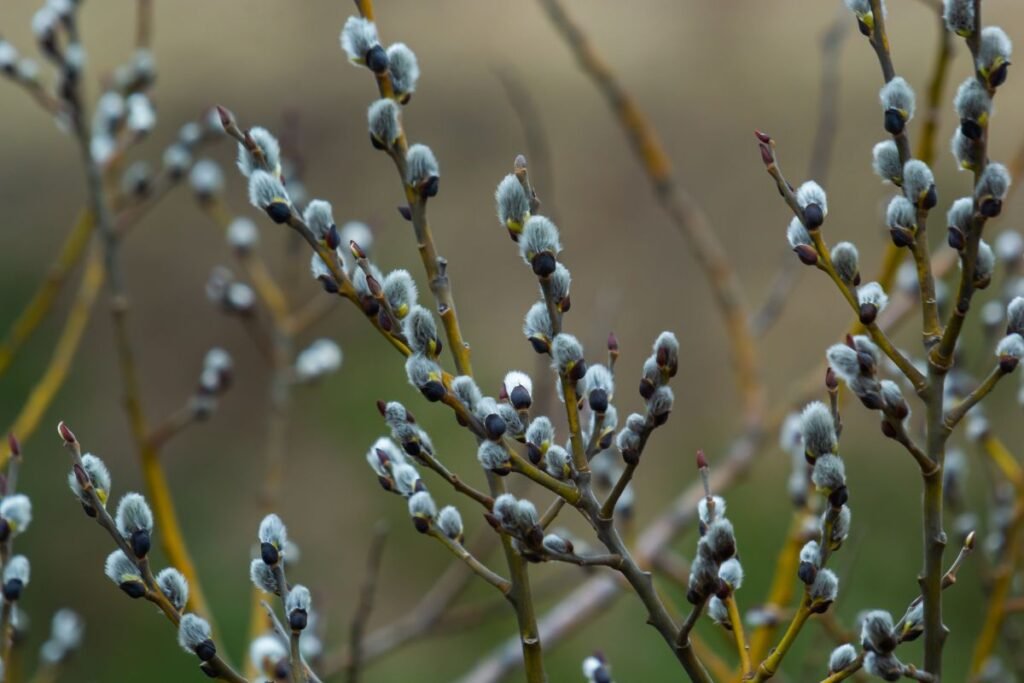
Goat Willow tea may seem like an unusual choice, but this familiar springtime plant has a fascinating history in traditional herbal medicine. Most nature lovers recognise the trees and shrubs that burst into bloom each spring, producing small, fluffy flower clusters commonly known as pussy willows. A bouquet of these soft, silvery catkins makes a beautiful springtime decoration and often takes pride of place on the Easter table. But did you know that pussy willow catkins are edible? Even more surprisingly, traditional herbal medicine has long valued both goat willow flowers (catkins) and bark for their potential to relieve various ailments and health complaints.
A Brief Introduction to Goat Willow
Goat Willow (Salix caprea) is a deciduous tree or shrub of the willow family (Salicaceae). Native to Europe and Asia, it prefers sunny locations and moist soil. It typically reaches 2–12 metres in height (depending on growing conditions). Goat Willow grows relatively quickly and can live for approximately 60 years.
Young plants have smooth, greyish-green bark, while mature trees develop dark grey, fissured bark. Their leaves vary in size and shape, with smooth or serrated edges, greyish-green upper surfaces and pale, hairy undersides. The flowers grow in catkins, and the tree usually blooms in April, before its leaves fully emerge.
Goat Willow has a long history of medicinal use. Its bark contains tannins, flavonoids, and salicylic acid, while herbal preparations traditionally use both the bark and flowers. Beyond its medicinal applications, people also use goat willow bark to produce black dyes. Its wood serves as firewood and provides material for wood carving and pulp production.
The Health Benefits of Goat Willow Tea
Traditional herbal medicine attributes a wide range of properties to goat willow tea and other preparations made from this plant. These include tonic, astringent, anti-inflammatory, antiseptic, wound-healing, and stimulating effects. Its traditional applications cover a surprisingly broad range of health concerns:
Traditional remedies for various ailments
Herbalists have traditionally used goat willow bark tea to relieve rheumatism, whooping cough, headaches, fever, various types of bleeding, gout, malaria, gastrointestinal disorders, and neuralgia. They have also valued it for its calming and anthelmintic properties. For external use, people add goat willow tea to bathwater. They can also prepare powders from dried plant material for traditional use on ulcers, wounds, sores, and excessive sweating. In various Asian traditions, goat willow tea has long been used for fever and as a calming, diuretic, and astringent preparation.
Herbal medicine has traditionally used goat willow flower decoctions for a variety of complaints, including gastrointestinal disorders (excluding gastritis associated with increased stomach acidity), neuralgia, hypertension, kidney conditions, inflammatory liver diseases, rheumatism, varicose veins, tuberculosis, whooping cough, migraines, neuropsychiatric disorders, fever, dermatitis, and gout.
Potential cardiovascular applications
Traditional herbal medicine recommends alcoholic extracts of goat willow flowers for functional cardiovascular complaints, including tachycardia and pain associated with vascular spasms. Various traditional healing systems have also used goat willow preparations as alternatives to quinine and aspirin. This connection is particularly interesting because scientists originally developed aspirin from compounds found in willow bark. Goat Willow belongs to the same botanical family.
Use in herbal blends and hair care
Goat willow bark features in traditional diaphoretic herbal tea blends, which people use primarily to manage cold-related symptoms. A decoction made from the bark and leaves also has a history of traditional use as a hair-strengthening and hair-growth remedy.
A source of bioactive compounds
Goat willow contains a variety of biologically active compounds. Scientific research has investigated its potential analgesic, anti-inflammatory, antioxidant, anticancer, cytotoxic, antidiabetic, antimicrobial, neuroprotective, and hepatoprotective properties. However, many of these effects come from preliminary laboratory or experimental research and do not necessarily demonstrate benefits in humans.
Bark as the main medicinal ingredient
Goat willow bark serves as the primary plant material in many traditional herbal preparations. People use it to make medicinal decoctions, infusions, and teas. Certain compounds in the bark have also attracted research interest for their potential role in weight management.
The beneficial properties of goat willow catkins
Goat willow flowers contain some of the same compounds as the bark, although generally in lower concentrations. Traditional herbalists use flower infusions and decoctions as tonics. They also attribute haemostatic (bleeding-control), calming, antipyretic (fever-reducing), diuretic, astringent, anti-inflammatory and antimicrobial properties to these preparations.
Goat willow honey
Honey from goat willow blossoms also deserves attention. During the flowering season, the tree attracts large numbers of insects that collect its abundant nectar and pollen. Goat willow is therefore a valuable nectar source for bees. Traditional remedies associate its honey with relief from various cold-related symptoms. Some sources also suggest that people with diabetes can consume it, although honey still contains significant amounts of sugar and requires careful portion control.
Harvesting, Drying, and Storing Goat Willow
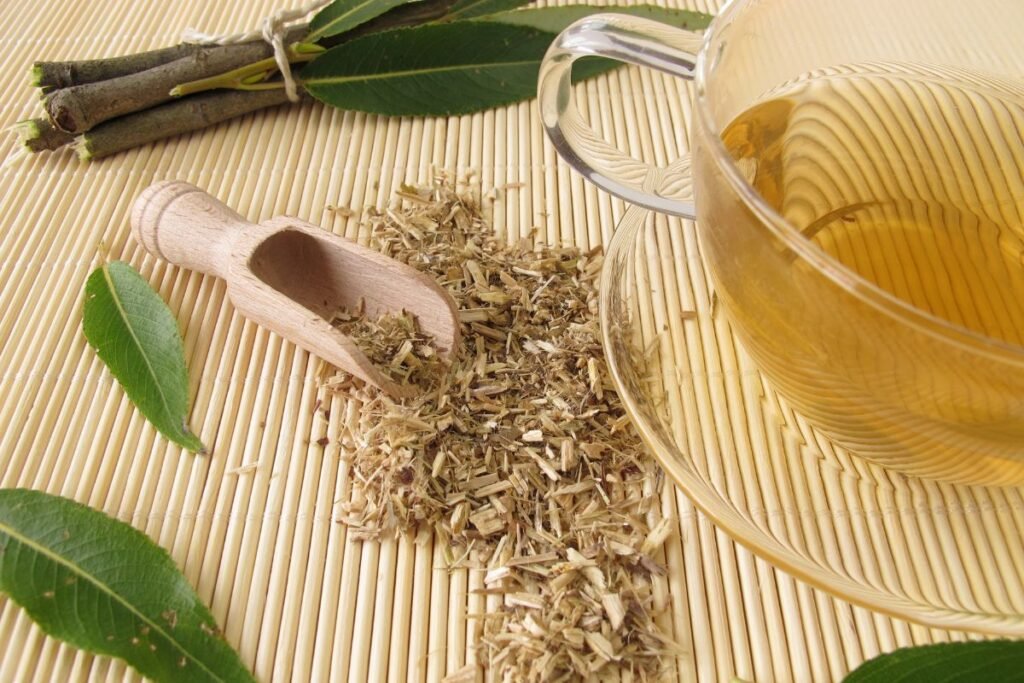
Harvest goat willow bark in late March or early April, before the tree flowers and its buds begin to open. Dry the bark under a shelter, away from direct sunlight, or in a well-ventilated room. Spread the pieces out on a clean cloth or hang them up to dry, making sure they do not touch one another. The bark is ready for storage when it snaps and crackles rather than bends when you try to break it.
You can also collect goat willow flowers for herbal preparations. Harvest them in April and dry them in the same way as the bark: under cover, away from direct sunlight, or in a well-ventilated space.
Goat Willow Bark and Soapwort Root Tea
Traditional herbal medicine recommends drinking 100 ml of this tea four times a day for rheumatism or jaundice. People also use it during recovery after infectious diseases.
Ingredients:
- Equal parts of ground goat willow bark and soapwort root
- A few dried rosehips or rosehip syrup
- 400 ml boiling water
Preparation:
- Add two teaspoons of the herbal mixture and four rosehips to the boiling water. Simmer over low heat for 10 minutes.
- Remove from the heat and let it steep for one hour. Strain before drinking, if desired.
- If you do not have dried rosehips, you can use rosehip syrup instead. Stir it into the prepared tea just before drinking.
Goat Willow Tea for Dandruff
Use warm goat willow tea to wash your hair every 3–4 days. Traditional herbal remedies recommend this preparation to help manage dandruff, alopecia, and itchy scalp.
Ingredients:
- Equal parts of finely chopped goat willow bark and turnip
- 1 liter of boiling water
Preparation:
- Pour the boiling water over four tablespoons of the goat willow bark and turnip mixture. Simmer for 10 minutes.
- Remove from the heat and let the decoction steep for two hours.
- Strain before use.
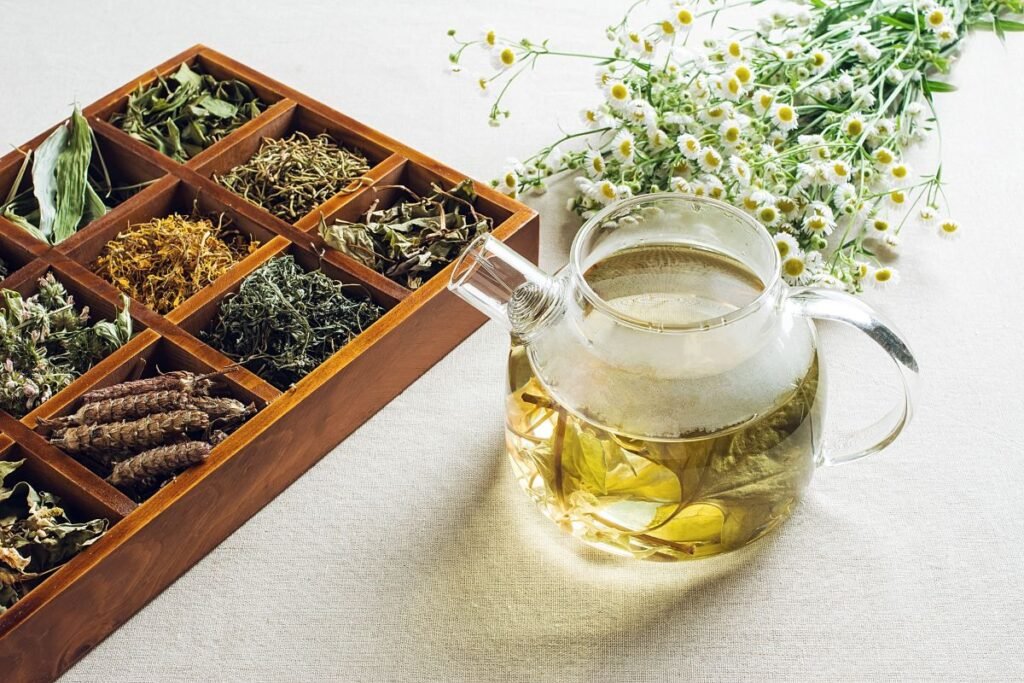
Chamomile, Raspberry, Birch, Linden, and Goat Willow Tea
This herbal blend traditionally serves as an antipyretic (fever-reducing), diaphoretic (sweat-promoting), calming, and mildly diuretic remedy. People use it to manage fever and muscle aches associated with colds or influenza. The recipe makes a single serving, which you should drink at once. You can have 2–3 cups of this goat willow tea throughout the day.
Ingredients:
- 20 g goat willow bark
- 5 g chamomile flowers
- 5 g raspberry leaves
- 10 g birch leaves
- 25 g linden flowers
- 200 ml boiling water
Preparation:
- Finely chop all ingredients and mix together.
- Pour boiling water over one tablespoon of the herbal mixture and simmer for 10 minutes.
- Remove from the heat and let it steep for one hour. Strain before drinking.
Chamomile and Goat Willow Tea
Goat Willow has antiseptic properties. Combined with chamomile, it features in herbal remedies for stomach complaints and digestive discomfort. Traditional recommendations suggest drinking 100 ml twice a day.
Ingredients:
- 1 teaspoon of dried, finely chopped goat willow bark
- 1 teaspoon of dried chamomile flowers
- 200 ml boiling water
Preparation:
- Pour boiling water over the herbal mixture and leave it to steep for 15 minutes.
- Strain before drinking. Add sugar or another sweetener if desired.

Coltsfoot, Linden, Raspberry and Goat Willow Tea
Traditional herbal medicine recommends this blend for colds and influenza. It also has a fever-reducing effect. Drink it 3–4 times a day.
Ingredients (in equal proportions):
- Goat willow bark
- Coltsfoot
- Linden flowers
- Raspberries
- 400 ml boiling water
Preparation:
- Take equal amounts of all mentioned ingredients, crush them, and mix thoroughly.
- Pour boiling water over one tablespoon of the mixture. Simmer over low heat for five minutes, then strain.
Goat Willow Flowers for Immune Support
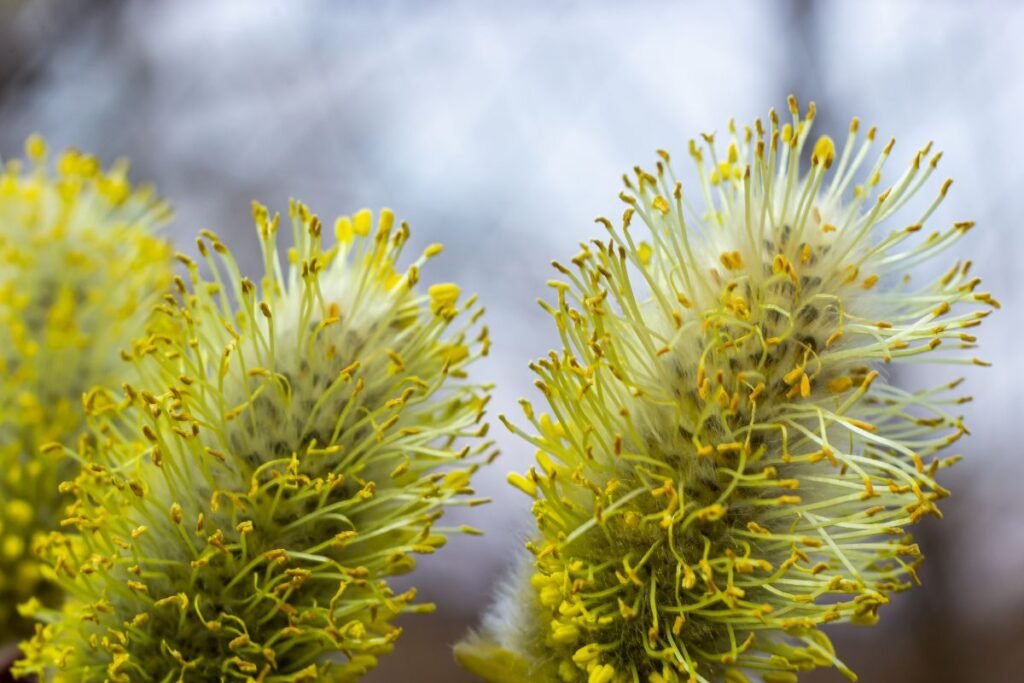
Eating willow’s flowers is also one of the simplest traditional ways to consume this plant. You can enjoy the catkins fresh during the flowering season or dry them for later use. However, as with any medicinal plant, moderation matters. Traditional recommendations suggest that 2–3 catkins a day are enough for supplementary use.
Goat Willow flowers contain compounds that may produce effects similar to those of aspirin. These include potential blood-thinning and pain-relieving properties. So, if a goat willow grows nearby, you might feel tempted to skip a trip to the pharmacy altogether!
Possible Side Effects of Goat Willow
Avoid drinking goat willow bark or flower tea if you:
- Are pregnant or breastfeeding.
- Are giving it to children under two years of age.
- Have gastritis.
- Have increased stomach acidity.
- Take medication that affects blood clotting.
Drinking large amounts of goat willow tea or using it continuously for longer than 3–4 weeks may also cause constipation.
Sources:
- https://www.frontiersin.org/articles/10.3389/fphar.2021.593856/full
- https://nmedik.org/salix-caprea-l.html
- https://www.tiensmed.ru/news/ivakozia-ab0.html
Research:
- https://www.ncbi.nlm.nih.gov/pmc/articles/PMC8716786/
- https://www.sciencedirect.com/topics/agricultural-and-biological-sciences/salix-caprea
Associative photos © Canva.