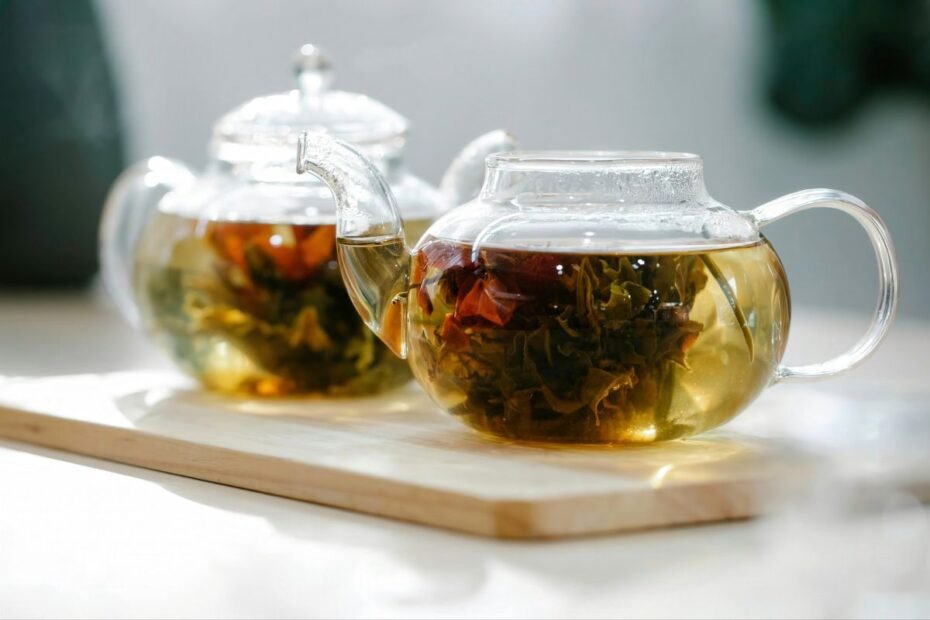
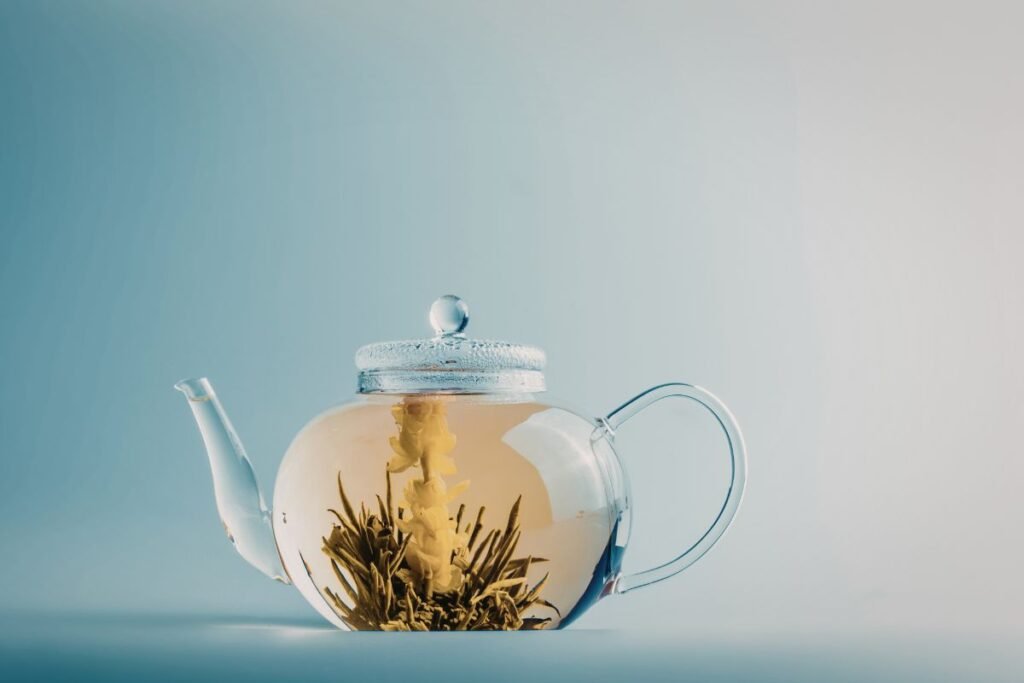
The blooming tea consists of carefully hand-tied bundles of green tea leaves that unfold in hot water, revealing a flower-like display. As the leaves gradually loosen and reveal the blossom hidden within, the transformation creates a moment of gentle surprise and quiet delight, evoking calm, pleasure, and aesthetic appreciation. Although blooming tea does not appear in the ancient traditions of classical tea ceremonies. It is a relatively recent creation, which has gained popularity in modern society due to its exotic character and visual appeal.
Its preparation differs very little from that of conventional teas. Also, it preserves many of the familiar qualities and benefits associated with them. Let us explore what blooming tea truly is, how people make it, its origins, and its potential advantages.
What Is Blooming Tea?
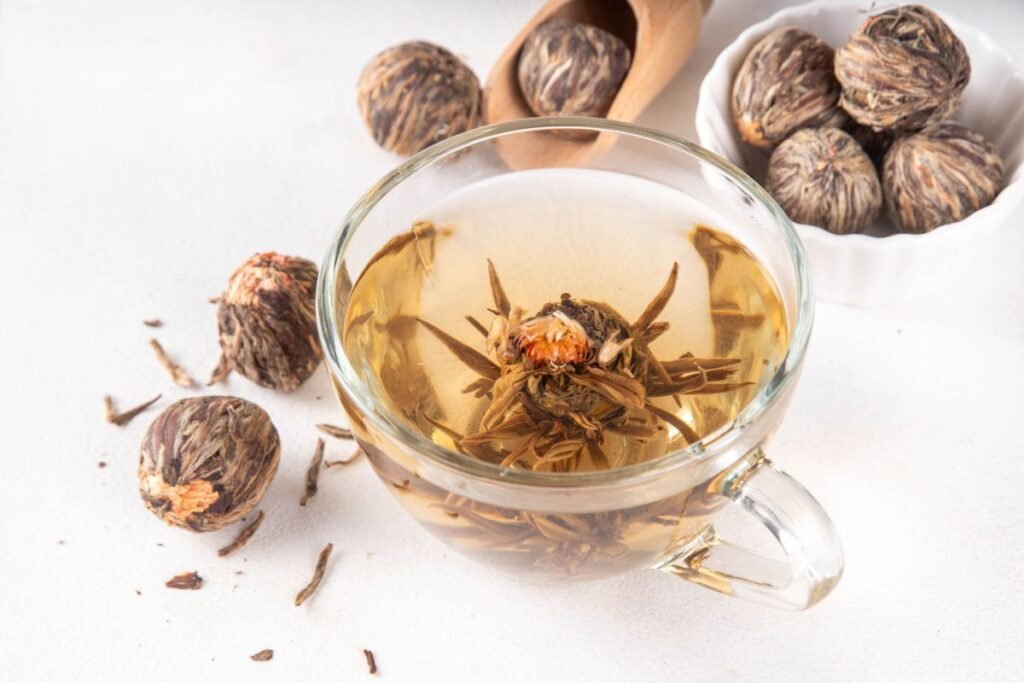
Blooming tea is a distinctive, handcrafted creation in which a tightly bound bundle of tea leaves, placed in hot water, slowly opens to reveal a flower emerging from within. Achieving this striking visual effect requires skilled manual work: individually arranging and wrapping green or white tea leaves around one or more dried blossoms to form a compact sphere.
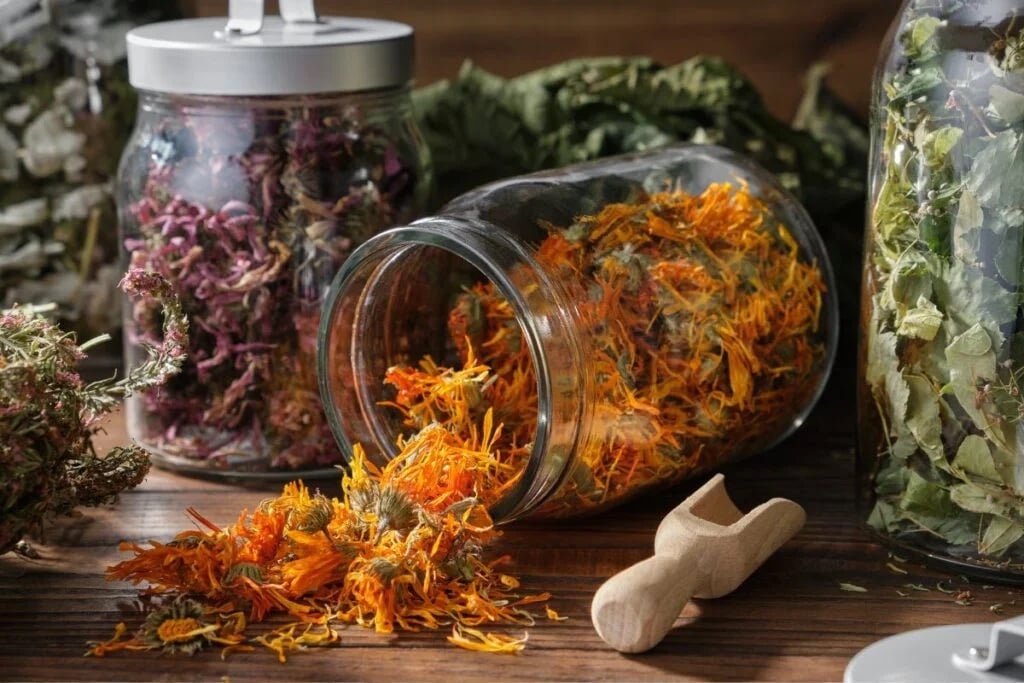
The flavor profile is typically delicate and lightly sweet, combining the fresh notes of green tea with subtle floral undertones. Yet people appreciated blooming tea less for its taste than for its visual performance. It has principal components such as green or white tea leaves (most often sourced from China’s Fujian Province or the Yunnan region), paired with selected blossoms such as:
Each ingredient contributes not only aroma and nuance but also the layered visual effect revealed during infusion.
For this reason, people customarily prepare blooming tea in a clear glass teapot, allowing one to observe the entire unfolding process from beginning to the end.
A Surprisingly Recent History
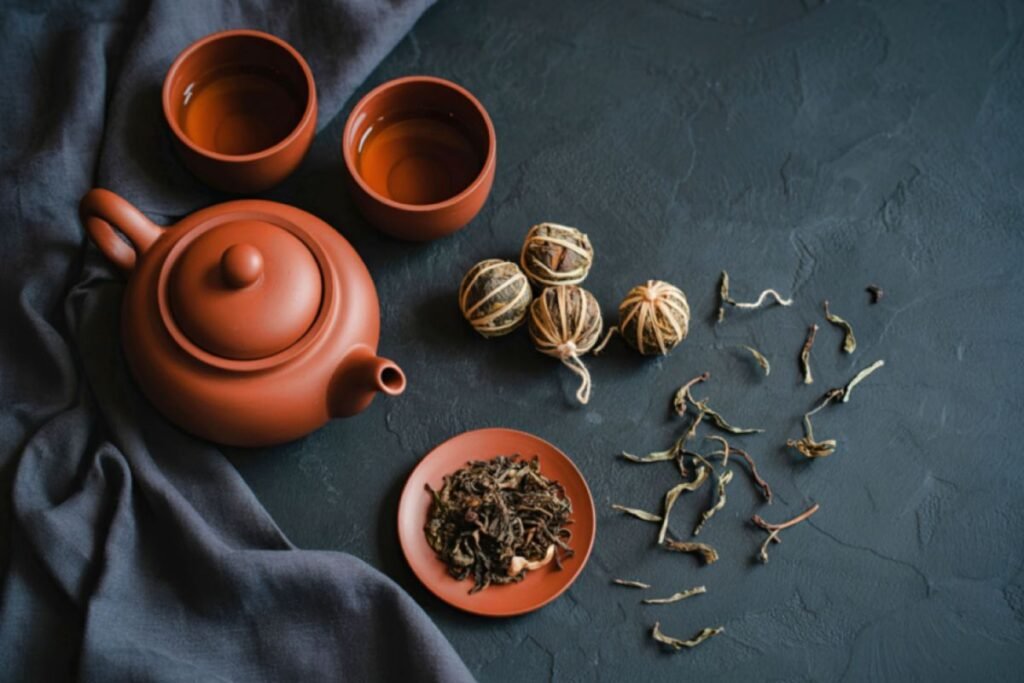
Despite appearances, blooming tea does not have deep traditions in a centuries-old ritual. Its history is comparatively brief. The practice emerged in China only some 30 to 40 years ago, around the 1980s and 1990s. Rather than being an ancient ceremonial beverage, it originated as an innovative and visually captivating product designed in part to appeal to travelers and tea enthusiasts seeking something novel.
Over time, its production expanded as international interest grew. By the early 2000s, blooming tea had reached Western markets in Europe and the United States, where it became popular as a gift item and a feature of special occasions. Its photogenic nature further accelerated its visibility in the age of social media. While it lacks deep historical roots, blooming tea nonetheless reflects Chinese artistry, precision, and aesthetic sensibility within the broader tea culture.
How Blooming Tea Is Made
Crafting a single blooming tea bundle is a meticulous and time-intensive process that demands training, patience, and manual skill. The production involves several carefully controlled stages.
Preparation of the Tea Leaves
People selected only young, tender leaves of uniform size and quality, typically harvested in early spring or early summer. After picking, they allowed the leaves to wither in a ventilated space for one to three hours. At this time, leaves reduce their moisture content (approx. 30%) and increase pliability. Then, people briefly heat the leaves (30–120 seconds) at 250–300 °C to halt oxidation. Following this, people gently roll the leaves by hand to enhance flexibility and shape. An initial drying phase at 110–120 °C reduces the remaining moisture to a stable level of 5–7 % for shaping.
Preparation of the Flowers
Growers harvest the blossoms at full bloom while they are still fresh, typically in the morning after the dew has evaporated. They then air-dry the flowers or dry them at low temperatures (40–50°C) for 24–72 hours, reducing the moisture content to approximately 8–12% to preserve their shape, color, and fragrance. Finally, artisans select only intact, vibrant flowers for further use.
Hand-Tying the Bundle
Handcrafters arrange between five and twelve tea leaves on a flat surface to form a base. They place one to three dried flowers in the center, and layer additional leaves in concentric circles. people carefully fold and wrap the leaves by hand around the floral core to create a compact sphere. Cotton or food-safe thread secures the shape. Depending on complexity, shaping a single bundle may take 10-40 minutes.
Final Drying
The tied bundles undergo further controlled drying at 60–80°C and 30–60 minutes to stabilize their structure. After this initial phase, handcrafters trim the threads if necessary, and gently dry the tea again at 50–70°C for about 20–40 minutes before cooling and packaging.
Blooming Tea Benefits
Blooming tea is not a miraculous beverage, and its health properties largely mirror those of other high-quality green or white teas. Its benefits derive primarily from its ingredients—tea leaves and selected flowers.
Green tea is rich in antioxidants, including catechins and polyphenols, which help combat oxidative stress and may contribute to reducing the risk of certain chronic conditions. Regular consumption may support cardiovascular health by promoting healthy circulation and helping maintain balanced cholesterol and blood pressure levels.
A cup of blooming tea typically contains a modest amount of caffeine—generally around 15 to 30 milligrams—providing mild stimulation that can enhance focus and alertness without excessive intensity. As a hydrating beverage, it may also support digestion and help sustain steady energy levels. Certain floral additions, such as jasmine or chrysanthemum, are traditionally associated with calming properties and digestive comfort. Nevertheless, the specific effects can vary depending on the blend and brewing method.
How to Prepare Blooming Tea Properly
Because blooming tea is prized primarily for its visual transformation, you should ideally brew it in a transparent glass teapot or a tall, clear glass holding approximately 300–500 milliliters of water.
Water temperature is critical. The ideal range is 80–85°C. If using freshly boiled water without temperature control, allow it to cool for five to seven minutes before pouring.
Place the tea bundle in the empty vessel first. Rather than pouring water directly onto it from a height, pour gently along the inner wall of the teapot, or add a small amount of water before introducing the bundle. Use no more than 300–500 milliliters of water per bundle.
Initially, fill the vessel halfway and observe as the bundle slowly begins to unfurl over 3–5 minutes. Once it has nearly opened, add the remaining water. The total steeping time typically ranges from three to seven minutes.
After enjoying the first infusion, you may steep the same bundle again without removal. Add more hot water after approximately ten to fifteen minutes and allow it to infuse for two to four minutes for a stronger second brew. High-quality blooming tea can often withstand a third infusion, requiring a slightly longer steep of three to five additional minutes.
In this way, blooming tea offers not only a beverage, but also a contemplative ritual—an unfolding performance of craftsmanship, nature, and quiet beauty within the glass.
Sources:
- https://www.artoftea.com/blogs/tea-101/what-is-blooming-tea
- https://www.chadotea.com/blogs/blog/blooming-tea-history
- https://the-qi.com/blogs/journal/what-are-blooming-flowering-teas
- https://aliveherbals.com/blogs/health-food-store/what-is-blooming-tea
Associative photos © Canva.