Barley groats are a pantry staple deeply rooted in traditional cuisine, commonly used for nourishing porridges, stews, and side dishes. Yet inspiration from East Asia reveals a different and far less familiar use for barley: a tea. Across various Asian cultures, barley tea comes in many forms and preparations, demonstrating that these humble grains can be transformed into a refreshing, caffeine-free, and health-conscious beverage with unexpected barley tea benefits.
Skeptics may question the idea of “wasting” barley on a drink that is less nutritionally dense than a grain dish. However, barley tea serves a different purpose. It is a mild, soothing beverage ideal for hydration, thirst relief, and enjoying a subtle, earthy flavor—especially when avoiding caffeine. In this article, we explore what barley seeds tea is, how you should prepare it, and its advantages and limitations. Also, we will discuss how it differs from both porridge and coffee.
What Is Barley Tea?
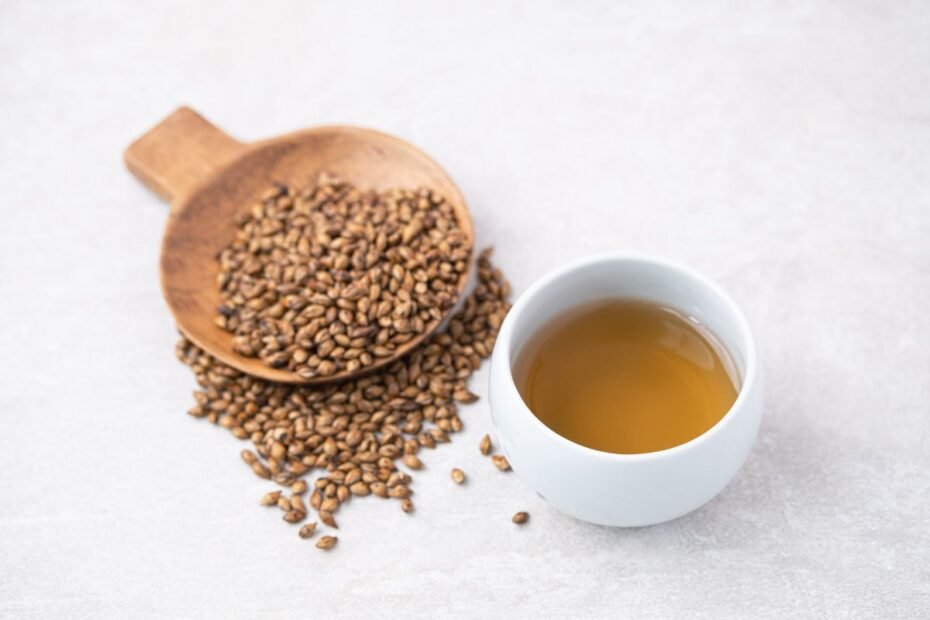
Despite its name, barley tea is not a real tea. This beverage does not contain tea leaves but barley grains—either lightly roasted or unroasted. There are two preparation methods: steeping the grains in boiling water and allowing them to infuse, or simmering them gently for several minutes.
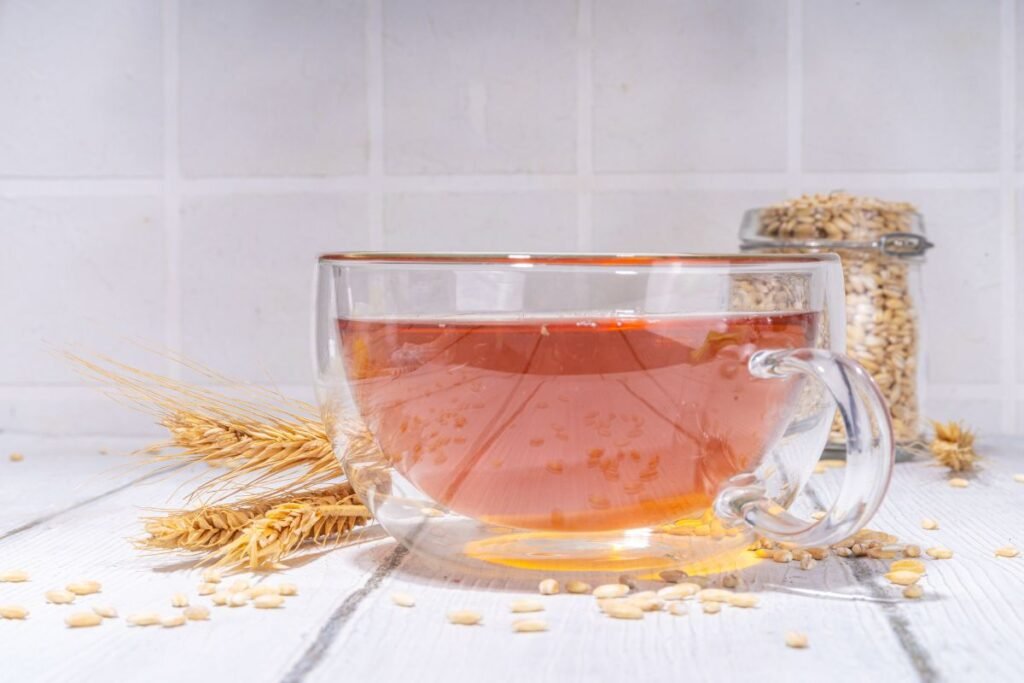
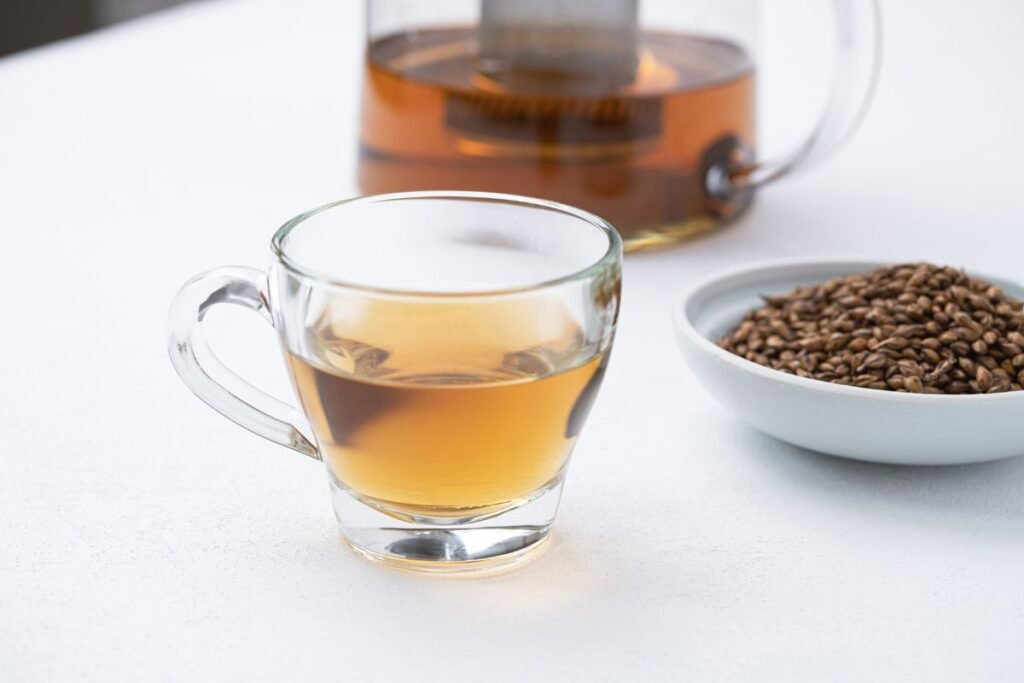
The resulting drink ranges from pale amber to straw-colored. Its flavor is delicate and grain-forward, often described as mildly nutty or slightly sweet, with a clean, unobtrusive aroma. Barley beverage feels refreshing and light on the body, making it particularly suitable for evening consumption or for those avoiding caffeinated beverages altogether.
While barley infusion remains relatively uncommon in many continents and countries (unlike barley coffee), people widely consume it in East Asia—especially in China, Japan, and Korea. It has names such as mugicha or boricha. In these countries, barley tea preparations and consumption have options:
- Served cold with ice during the summer as an alternative to water
- Consumed hot in winter as a gentle warming drink
- frequently offered in Japanese restaurants instead of plain water
Choosing the Right Barley
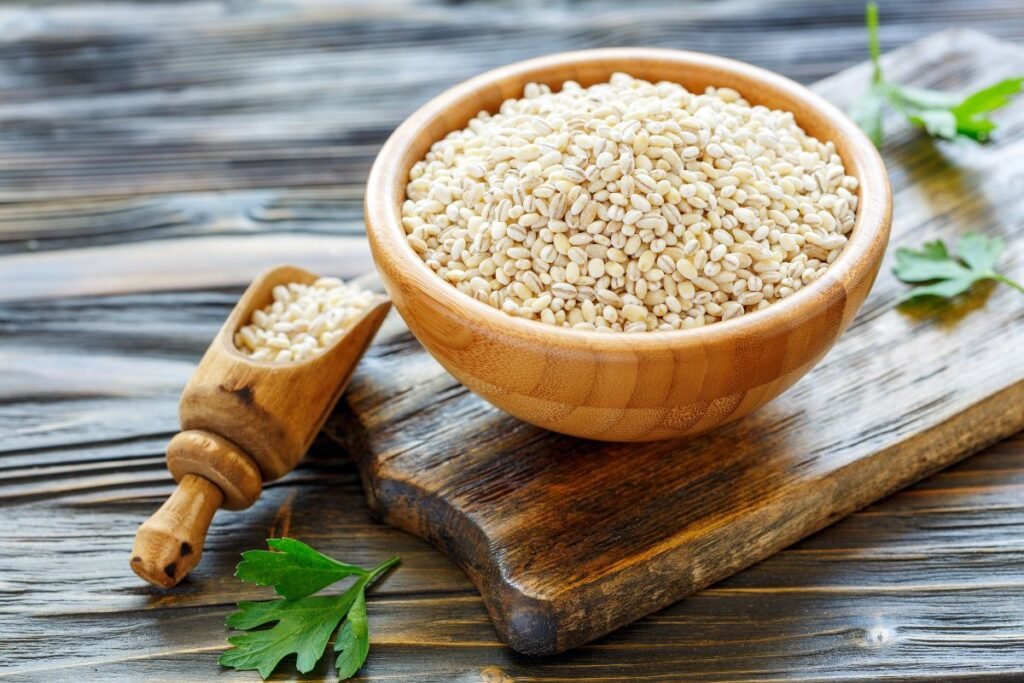
At first glance, making barley tea may seem as simple as purchasing pearl barley or cracked barley from a grocery store. In reality, standard cooking barley often falls short. Such grains are typically unsorted, minimally processed, and may contain impurities or uneven particle sizes—factors that compromise both flavor and clarity.
For authentic barley tea, it is best to use barley grains specifically formulated for infusion. Tea-grade barley is usually cleaned, sorted, and sometimes lightly roasted to enhance aroma and taste. You can find these products online or in specialty Asian grocery stores, where people may sell barley in several forms:
- loose, lightly roasted grains packaged like traditional tea
- whole grains enclosed in large tea bags
- finely ground barley in individual sachets
- ready-to-drink bottled barley tea
Nutritional Value of Barley Tea
Scientific research on barley products is extensive, but studies focusing specifically on barley tea remain limited. As a result, its nutritional profile is inferred from the properties of barley itself, with the understanding that infusion yields much lower concentrations. Approximate nutritional values per 100 ml are in Table 1.
| Component | Amount |
| Energy | ~1 kcal |
| Protein | 0 g |
| Fat | 0 g |
| Carbohydrates | ~0.3–4 g |
| Dietary fiber | <1 g |
| Sodium | ~1–10 mg |
| Calcium | ~20 mg |
| Iron | ~1 mg |
| Potassium | ~100 mg |
Mineral levels are modest, and vitamins are largely absent. Nevertheless, barley tea still offers practical benefits. It is completely caffeine-free, making it safe for evening consumption and unlikely to disrupt sleep. Its near-zero calorie content suits those monitoring body weight, and it is safe during pregnancy and breastfeeding due to the absence of stimulants.
Barley and Barley Tea Benefits
While whole barley grains provide well-documented health benefits, you should drink barley tea as a gentler extension of these properties rather than an equivalent substitute. Its primary role and barley tea benefits lie in hydration and mild physiological support rather than therapeutic impact.
Cholesterol Reduction
Multiple meta-analyses have shown that diets enriched with barley-derived beta-glucans significantly reduce total cholesterol and LDL (“bad”) cholesterol levels. Clinical trials, including studies involving Japanese men, also demonstrate reductions in visceral fat mass. These effects are attributed to beta-glucans increasing intestinal viscosity, slowing cholesterol absorption, and enhancing bile acid excretion. Barley tea benefits also consist of containing far lower levels of beta-glucans, but trace effects may still be present.
Blood Glucose Regulation
Barley foods have a low glycemic index due to their fiber and beta-glucan content, which slows glucose absorption and supports blood sugar control. Controlled trials show reduced post-meal glucose spikes and improved glycemic response. Barley tea benefits may contribute marginally to this effect, though its impact is significantly weaker than that of whole grains.
Digestive Health and Gut Microbiota
Dietary fiber intake is associated with improved digestion and reduced risk of colorectal disease. Barley fibers and beta-glucans act as prebiotics, nourishing beneficial gut bacteria. Barley tea benefits: it contains fewer of these compounds but may still support digestion (indirectly).
Antioxidant and Phytochemical Properties
Talking about more barley tea benefits, we should look into barley grains, which contain phenolic acids, flavonoids, tocopherols, and other phytochemicals with antioxidant and anti-inflammatory potential. These compounds are also present in barley infusions, though in lower concentrations than in solid barley foods.
Recipe: Roasted Barley Tea
Rather than a bland, porridge-like brew, this method produces a deeper, cleaner flavor inspired by Japanese and Korean traditions.
Ingredients:
- 2 tablespoons of barley grains
- 1 liter of water
Instructions:
- Rinse the barley and dry thoroughly.
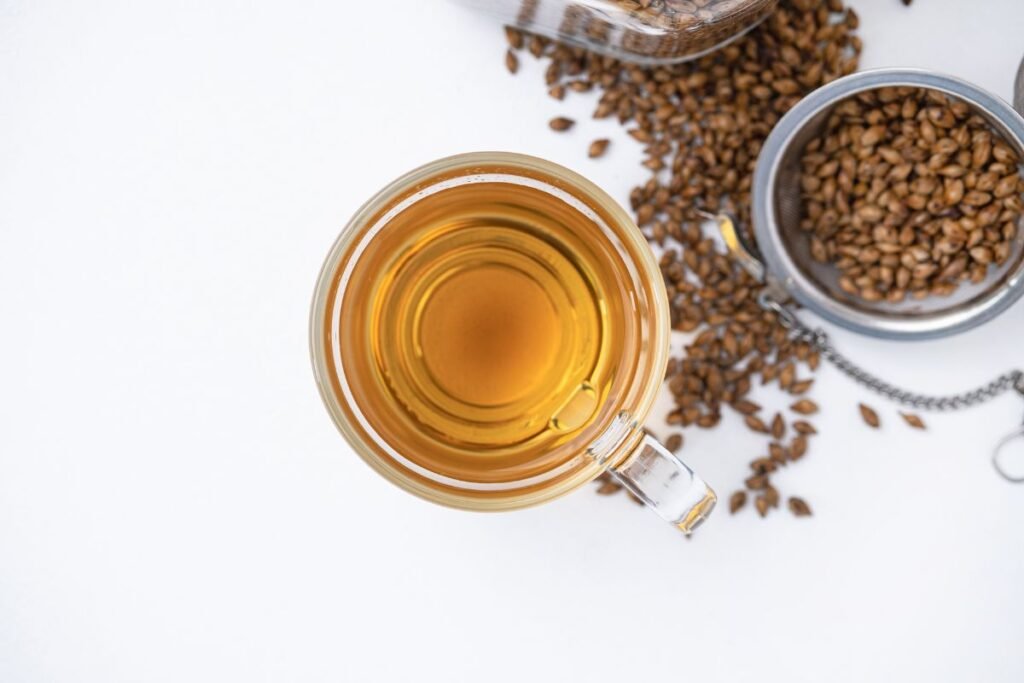
- Place the grains in a dry pan and roast in two stages. First, dry them over low heat for 2–3 minutes. Increase the heat to medium and roast until golden-brown in color, releasing a nutty, toasted aroma (about 3–5 minutes). This gradual method creates a richer flavor.
- Optionally, lightly crush the roasted grains using a mortar or rolling pin to enhance extraction.
- Transfer the barley to a pot and add water.
- Bring to a boil, then simmer for 10–15 minutes.
- Remove from heat and let steep for 5 minutes.
- Strain and serve.
- For an authentic East Asian experience, allow the tea to cool and enjoy it chilled.
Potential Side Effects of Barley Tea
Despite its mild nature, barley tea is not suitable for everyone.
- The most essential concern is gluten. Barley contains gluten, and individuals with celiac disease or non-celiac gluten sensitivity may experience symptoms even from barley tea. Brewing does not eliminate gluten, and trace amounts may remain in the infusion.
- Some individuals may experience digestive discomfort—such as bloating or mild abdominal cramps—especially when consuming strong tea, drinking it on an empty stomach, or having a sensitivity to grain products.
- Although barley is considered a potential allergen, allergic reactions to barley tea are rare.
- Theoretically, barley tea may slightly reduce the absorption of certain minerals, such as iron and zinc, due to the occurrence of phytates. However, phytate levels in barley tea are minimal, making this effect clinically insignificant.
Sources:
- https://www.healthline.com/nutrition/barley-tea-nutrition-benefits-and-side-effects
- https://www.sciencedirect.com/science/article/pii/S2666154323001849
- https://spe.lt/nutrition/barley-tea
- https://www.jstage.jst.go.jp/article/bbb/68/12/68_12_2616/_article/-char/ja
- https://pubmed.ncbi.nlm.nih.gov/18074229
- https://www.nature.com/articles/ejcn201689
- https://pubmed.ncbi.nlm.nih.gov/20924392
- https://www.mdpi.com/2072-6643/17/3/430
- https://www.researchgate.net/publication/8111348
Associated photos from ©Canva.