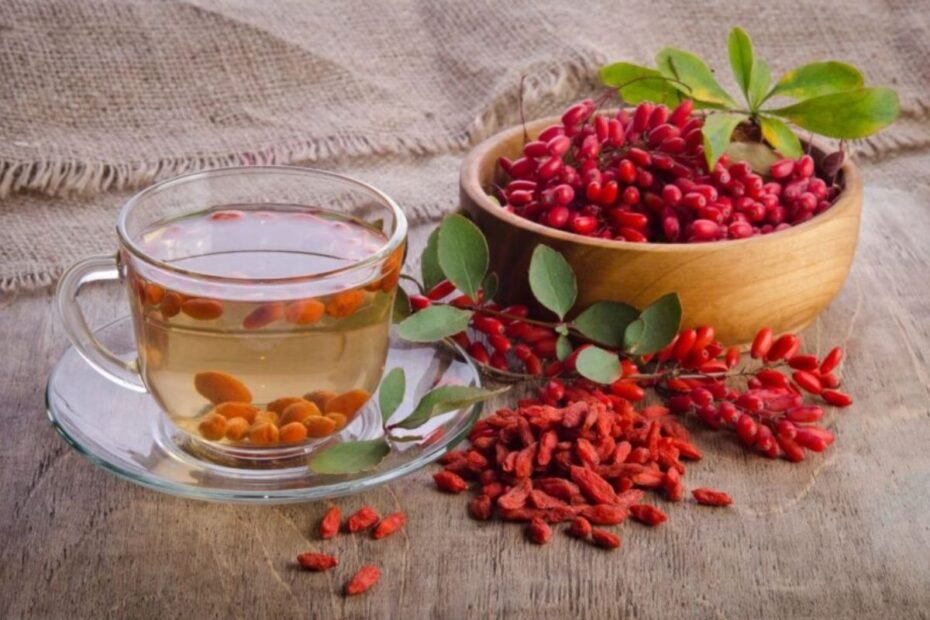
Despite the exotic-sounding name of Berberis, barberry tea is a product from a plant that grows exceptionally well in the temperate zone. Barberry (Berberis) belongs to the barberry family (Berberidaceae), and it widely grows across temperate and subtropical regions. The Berberis genus includes approximately 500 species of trees, shrubs, and herbaceous plants. The greatest diversity is in Asia and South America, while individual species grow in Africa, Europe, Canada, and North America. Two barberry species are more popular than others: Thunberg’s barberry (Berberis thunbergii) and common barberry (Berberis vulgaris). The latter is more widespread and is also cultivated as an ornamental shrub.
Botanical Characteristics of Common Barberry
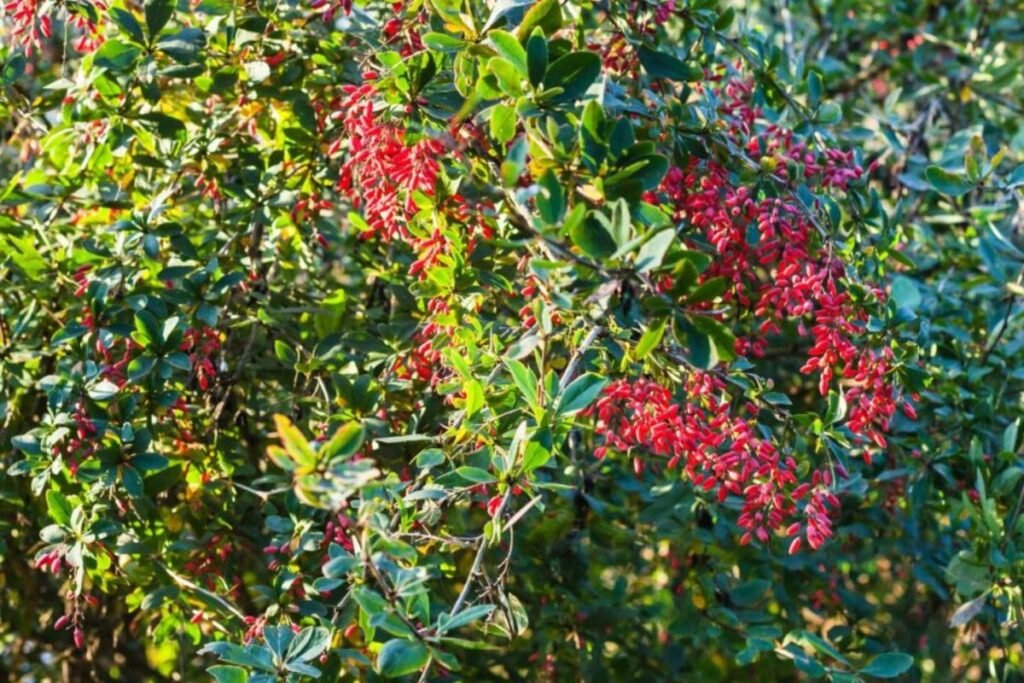
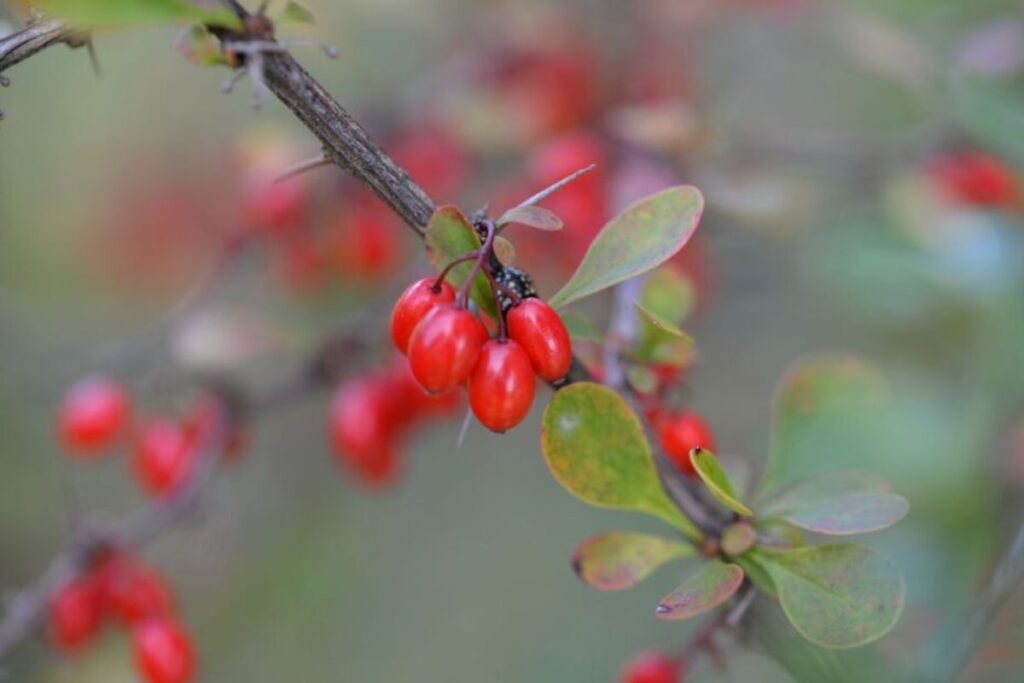
Common barberry is a deciduous, dense, and thorny shrub that can reach up to 3 meters. Its leaves are reddish-green and elliptical. The plant blooms in May and June, producing yellow, fragrant flowers. In August, it bears red, usually elongated, aromatic, sweet-and-sour berries that often remain on the branches until late autumn.
All parts of the plant are used for human purposes—from roots to berries. People consume the leaves and berries as food, while the roots and bark serve as medicinal preparations.
Barberry is rich in valuable bioactive compounds, particularly alkaloids, the most important of which is berberine. You can prepare barberry raw materials at home, allowing one to maintain a long-term supply of this valuable compound.
Harvesting and Preparing Barberry Raw Materials
- Bark peeling starts in early spring and is used fresh.
- People harvest the leaves after flowering, around July. No more than one quarter of the leaves should be taken from a single plant. Select only healthy, undamaged leaves. Dry them in a warm, well-ventilated place protected from direct sunlight.
- Pick the berries when fully ripe, in August and September. Store fresh berries in the refrigerator for several days or freeze them. For drying, heat the berries at 90°C for one hour, then finish at 35–40°C. Store them in breathable packaging in a dry place and use them within one year.
- Dig the roots up in late autumn after the growing season. Take no more than one-quarter of the root system from a single plant. Wash the roots immediately in cold water, air-dry, then cut into 10–20 cm pieces and dry in a warm, well-ventilated space away from direct sunlight. Store in breathable packaging in a dry, ventilated area and remain suitable for use for up to three years.
A Brief History of Barberry
The medicinal properties of common barberry—more precisely, of berberine—were recognized over 3,000 years ago. The earliest written records of berberine being used to purify the blood date back to around 650 BCE and were found on clay tablets in Assyria (modern-day Iraq). In ancient Egypt, a mixture of barberry and fennel seeds was used against the plague. In traditional Eastern medicine, berberine has been used to treat fungal infections, skin conditions, and digestive disorders.
Health Benefits of Barberry and Berberine
Modern scientific research confirms the benefits of berberine for both disease prevention and treatment. The most well-documented benefits include:
- Diabetes prevention and management. Studies have shown that consuming up to 1,500 mg of berberine daily for three months can regulate blood glucose levels as effectively as medications used to treat type 2 diabetes.
- Lowering cholesterol and preventing cardiovascular disease. Research indicates that taking up to 1,000 mg of berberine daily for three months can reduce blood cholesterol levels by approximately 24%, outperforming some cholesterol-lowering medications.
- Blood pressure regulation. Studies confirm that when taken alongside antihypertensive drugs, a daily dose of 0.9 g of berberine improves blood pressure control.
- Female reproductive health. Berberine helps treat polycystic ovary syndrome (PCOS). After four months of use, ovulation and the chances of conception may improve.
- Treatment of diarrhea. Research has demonstrated that a single 400 mg dose of berberine can reduce diarrhea by nearly half within eight hours.
- Urinary tract infections. Berberine exhibits strong antimicrobial activity against various bacteria, including those responsible for chlamydial infections.
- Berberine also possesses antiseptic properties. Infusions are used to rinse the oral mucosa and treat wounds. Additionally, it is an effective immune-supporting agent, helping the body fight viruses and infections.
Preparing and Using Barberry Tea
You can prepare barberry tea using either fresh or dried barberry materials. Barberry berries, leaves, and roots can also be combined with other medicinal herbs. Let’s flavor the tea with honey, orange, or other preferred additions. Consume it up to three times a day, which is a sufficient dose to achieve its health-promoting effects.
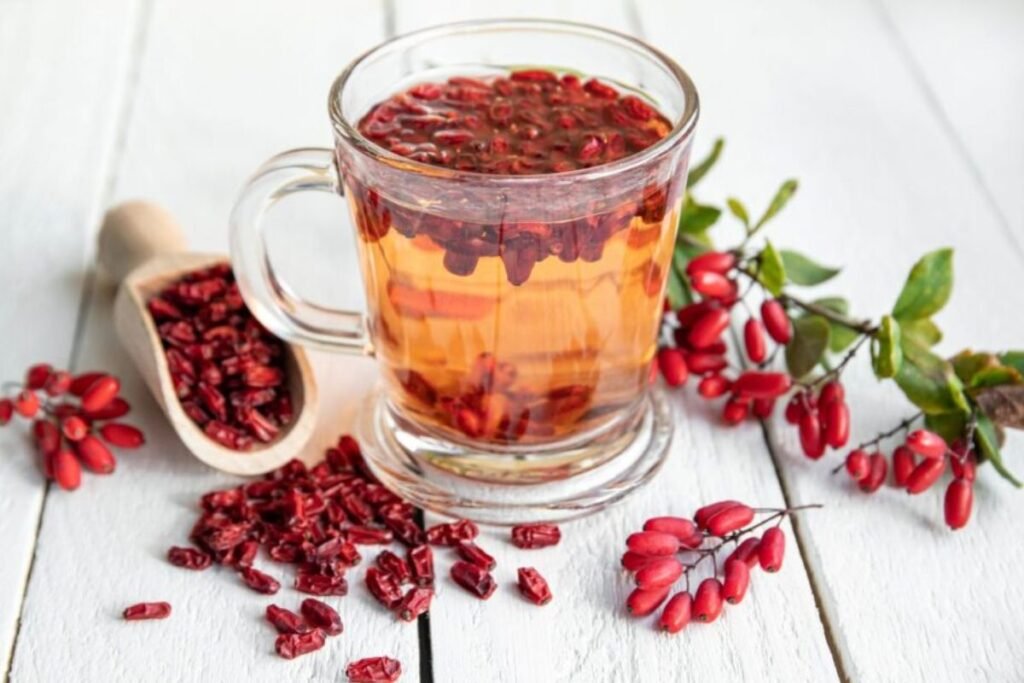
Classic Barberry Tea
Ingredients:
- 1 cup of water
- 2 teaspoons of fresh or dried barberry material (cut fresh berries into quarters or smaller pieces)
Pour hot—but not boiling—water over the plant material and steep for 15 minutes. Strain before drinking.
Barberry Tea with Orange
Ingredients:
- 2 tablespoons dried barberry material
- Peel off 1 orange.
- 1–2 slices of orange
- 2 cloves
- two cups of water
- 2 teaspoons of honey
Place all ingredients in a teapot and pour over boiling water. Stir in the honey, cover, and steep for 15–30 minutes. Prepare this beverage in larger quantities and store it in the refrigerator for 2–3 days. Before drinking barberry tea, strain and gently reheat, but do not boil.
Cold Berry and Barberry Drink for Refreshment
Ingredients:
- 3.5 liters of water
- 500 g frozen cranberries
- 5 tablespoons fresh or dried barberry berries or leaves
- 100 g blackcurrants
- Sweetener (honey, sugar, or other) to taste
- Half an apple
Bring cranberries and apples to a boil in water. Add the barberry material to the hot mixture and let it steep for 15 minutes. Blend the blackcurrants with the sweetener until smooth. Strain the cranberry, apple, and tea mixture, then add the blackcurrant purée. Chill thoroughly before serving; garnish with a sprig of mint if desired.
Barberry Juice: A Natural Anti-Inflammatory Drink
Sweet-and-sour barberry berries are an excellent source of vitamin C and also contain many other essential vitamins and trace elements. Juice pressed from these berries retains its beneficial properties and may have anti-inflammatory effects.
Wash fully ripe, healthy berries and press for juice. Heat the juice in an enamel pot to 80°C, pour it into sterile jars, seal tightly, and store in the refrigerator.
Barberry for Skin Care
Berberine, as a natural antiseptic, is particularly suitable for oily and problematic skin. To cleanse the skin, clear clogged pores, and improve skin condition, you can incorporate barberry tea into daily skincare routines.
The decoction made from barberry bark is the most effective product to wash or cleanse the face. You can also make a tea from leaves or berries and use it for cosmetic purposes. Berry decoctions, rich in vitamin C, help protect the skin from environmental damage and improve firmness.
Barberry in Everyday Cuisine
Barberry berries and leaves are a delicious ingredient in food preparation, particularly in Eastern cuisine. Both berries and leaves are suitable for culinary use. Crushed berries mixed with salt, orange zest, and cinnamon make an excellent seasoning for poultry, rice, and couscous dishes. You can add fresh spring leaves to salads and have a flavor similar to sorrel.
Barberry extract provides flavor in confectionery and beverage products. Fresh berries can replace lemon in both taste and nutritional value. You can also preserve and process barberries into jams, marmalades, and compotes.
Possible Side Effects of Barberry Tea
An overdose of berberine may cause vomiting and diarrhea, as well as dangerous reductions in blood pressure, heart rate, and respiration, or may impair kidney function. If such symptoms occur, you should immediately seek medical attention.
Experts recommend consulting a physician if you use berberine alongside blood pressure medications, diabetes treatments, diuretics, anticoagulants, antibiotics, or antihistamines, as berberine may interfere with their effectiveness.
Do not use berberine during pregnancy, as it may induce premature labor. Its effects on breastfeeding women and young children have not been sufficiently studied, and its use is therefore not recommended for these groups.
Barberry as a Natural Dye
Since ancient times, barberry berries and roots have been used to produce natural dyes. The berries yield a pink dye traditionally used for coloring paper and textiles such as wool, cotton, and linen.
Sources:
- Imenshahidi M, Hosseinzadeh H. Berberine and barberry (Berberis vulgaris): A clinical review. Phytother Res. 2019;33(3):504-523. doi:10.1002/ptr.6252
- Yin J, Xing H, Ye J. Efficacy of berberine in patients with type 2 diabetes mellitus. Metab Clin Exp. 2008;57(5):712-717. doi:10.1016/j.metabol.2008.01.013
- Rad SZK, Rameshrad M, Hosseinzadeh H. Toxicology effects of Berberis vulgaris (barberry) and its active constituent, berberine: a review. Iran J Basic Med Sci. 2017;20(5):516-529. doi:10.22038/IJBMS.2017.8676
- https://www.verywellhealth.com/barberry-berberis-vulgaris-what-you-need-to-know-89546
- https://www.healthline.com/nutrition/barberries
- https://gosumitup.com/about-barberry-spice-zereshk-berberis-vulgaris?desktop_view=show
Associative photos © Canva.