
For centuries, people have used elecampane root in traditional folk medicine to thin mucus, suppress coughs, promote sweating, ease vomiting, and combat bacteria. To address these ailments, elecampane tea has most commonly been prepared. What makes this tea so distinctive? One of the key components of the plant’s essential oil, alantolactone, exhibits antihelmintic properties. The ability of elecampane to support the treatment of a wide range of health conditions also supports scientific research.
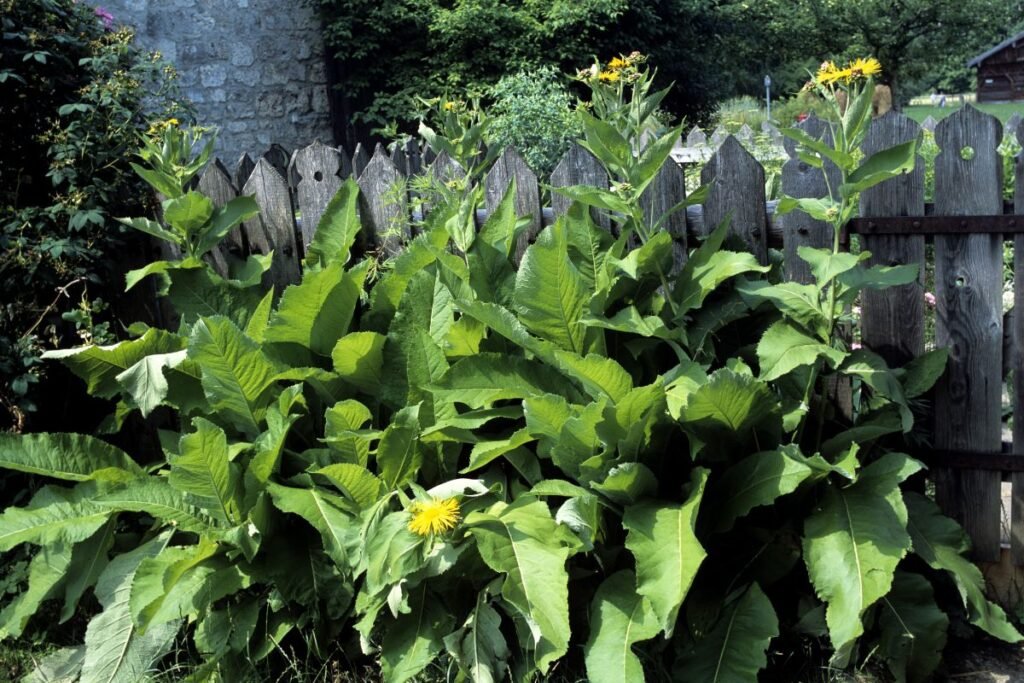
Elecampane (Inula) belongs to the genus of perennial herbaceous plants within the daisy family (Asteraceae). There are approximately 150 species of this plant worldwide. Elecampane species are most widely distributed across Asia, Africa, and Europe. The leaves are entire, and the flowers are yellow, forming composite flower heads. The most common species include British yellowhead (Inula britannica), willow-leaved elecampane (Inula salicina), and great elecampane (Inula helenium). The rhizome of elecampane is thick and relatively short. The underground parts (roots and rhizome) contain essential oils, alkaloids, bitter compounds, mucilage, and saponins.
All species of elecampane are used for medicinal purposes, and these plants are also cultivated as ornamentals.
Health Benefits of Elecampane Tea and Products
Scientific studies indicate that elecampane extracts possess therapeutic potential that people may apply across several health-related fields. Likewise, elecampane tea may help alleviate the symptoms of particular conditions.
Anti-inflammatory and Antioxidant Properties
Elecampane roots contain bioactive compounds with anti-inflammatory properties that may help manage inflammation-related respiratory diseases. A comprehensive review analyzing more than 120 studies concluded that elecampane demonstrates antioxidant activity, which may help counteract oxidative stress and inflammatory conditions. Such effects may also be relevant in diseases including cancer, impaired brain function, and diabetes. Alantolactone largely attributes these antioxidant properties to a compound found in plants of the Inula genus, including elecampane.
Potential Anticancer Effects of Elecampane Tea
One scientific review examined existing data on the traditional use of 16 plant species from the Inula genus, including elecampane. Among the conditions explored, cancer received particular attention. The authors noted that preliminary findings suggest compounds found in Inula species may possess anticancer potential.
Additionally, in vitro studies have shown that elecampane extract can be toxic to certain cancer cells and may exert significant anticancer effects. Such activity has been observed in studies focusing on brain cancer. Another study found that isoalantolactone, a compound isolated from elecampane, demonstrated potential anticancer activity against pancreatic cancer.
Further research investigated the effects of another elecampane-derived compound on leukemia cells. The researchers observed that it could even induce cancer cell death. According to scientists, elecampane extracts also affect breast cancer cells.
In vitro studies have also revealed that sesquiterpene lactones exhibit promising anticancer effects against breast tumors by inhibiting specific pathways involved in cancer cell activation.

Support for Respiratory Health
Elecampane root has been used to treat coughs and respiratory conditions: rhinitis, bronchitis, and throat infections. It may also contribute to the regeneration of lung tissue. An in vitro study found that alantolactone extracted from elecampane reduced airway inflammation caused by cigarette smoke exposure and helped relax the airways. The authors even proposed alantolactone as a potential therapeutic agent for chronic obstructive pulmonary disease (COPD).
Moreover, studies have shown that elecampane may reduce white blood cell activity and decrease inflammation in respiratory illnesses. In one study, children suffering from acute cough consumed cough-suppressing preparation containing elecampane for eight days. Researchers found that the treatment was safe and reduced both the severity and duration of coughing.
Antimicrobial Activity of Elecampane Tea
Scientists have also investigated elecampane root extracts for their potential antibacterial and antifungal effects. Research has demonstrated that compounds present in elecampane extract are active against Staphylococcus bacteria. The authors of these studies suggested further exploration of elecampane’s use in treating antibiotic-resistant infections. Additional studies revealed that elecampane root effectively targets staphylococci by rapidly damaging bacterial cell membranes and inducing cell death.
Other laboratory studies have shown that elecampane extracts may combat Mycobacterium tuberculosis, the bacterium responsible for tuberculosis. They have also been found to inhibit the growth of Candida fungi.
Harvesting Elecampane
Medicinal elecampane roots are typically harvested in autumn, before the first frosts. However, harvesting may also be done in early spring, once the first leaves begin to emerge. The rhizomes, together with the roots, are carefully dug up and cleaned (without peeling). They are then rinsed under running water, patted dry, and cut into pieces approximately 10–15 cm in length.
The prepared plant material is dried in a shaded, well-ventilated area or in a drying unit. The recommended temperature is 30–35°C to prevent the evaporation of essential oils. Properly prepared and dried elecampane root has a strong aroma and a pungent, bitter taste.
For those unable to harvest and dry elecampane themselves, it is readily available in pharmacies in various forms, including dried root powder, liquid extract, or tea. Dried, chopped root pieces can also be purchased and ground at home as needed.
How to Prepare Elecampane Tea at Home
Elecampane Root Tea
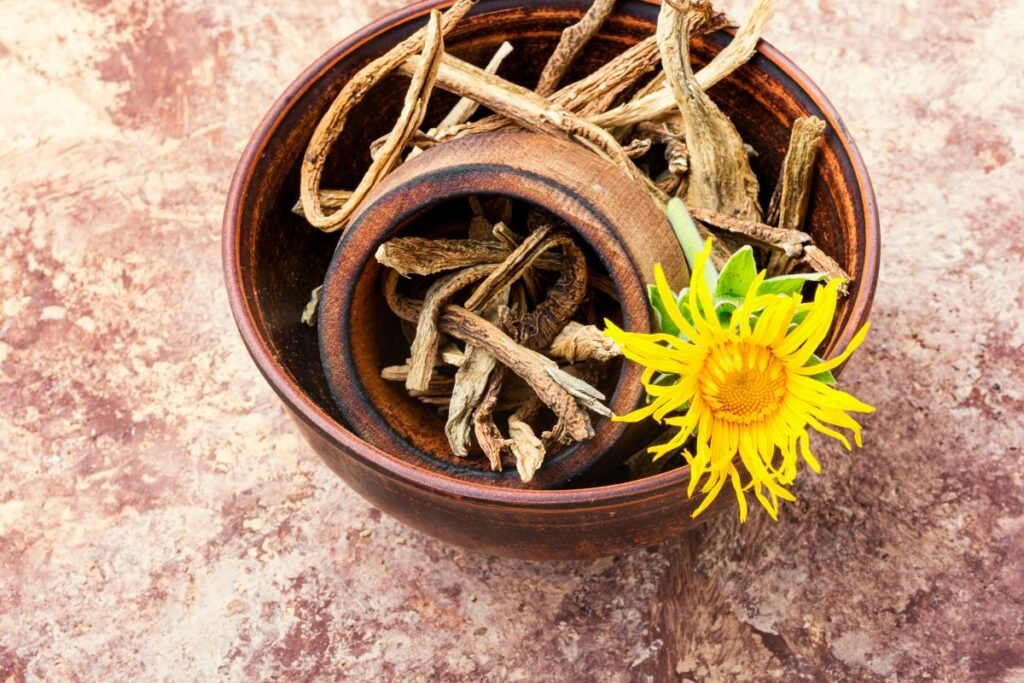
Elecampane root tea helps thin respiratory secretions and facilitates expectoration.
You will need:
- a cup for tea preparation
- 1 liter of boiling water
- 1 teaspoon of dried elecampane root
Pour boiling water over the elecampane root and allow it to steep for 15 minutes. Drink one glass 2–3 times daily while warm. Sweeten the tea may with honey or another preferred natural sweetener.
Calming Elecampane Tea
This elecampane tea may help the body recover after intense stress or illness, adding to its mild calming effect.
You will need:
- a heat-resistant container
- 1 tablespoon of dried, finely chopped elecampane root
- 300 ml of boiling water
Pour boiling water over the root, place the mixture on the stove, and simmer for 20 minutes. Remove from heat and allow the tea to steep, covered, for 4 hours. Strain before use. Drink 2–3 times per day, ⅓ cup before meals.
Elecampane Root Decoction
This decoction supports easier expectoration and promotes healthy digestive function.
You will need:
- a heat-resistant container
- 2 tablespoons of chopped elecampane root
- 400 ml of water
Pour water over the roots and bring to a boil. Once boiling, continue simmering for 10–15 minutes. Remove from heat, cover, and allow to infuse for 4 hours. Strain before use. Consume warm, 1 tablespoon 3–4 times per day.
Elecampane in Cosmetology

Infusions of Elecampane for Hair Rinsing
The cosmetological industry uses and adds elecampane to shampoos due to its ability to improve hair structure and reduce breakage. You can also prepare a homemade infusion and use it as a natural hair rinse.
You will need:
- a thermos
- 2 tablespoons of chopped elecampane root
- 200 ml of boiling water
Pour boiling water over the root in a thermos and allow it to infuse for 1–2 hours. Use the infusion to rinse clean hair after washing.
Also, try to add the infusion to hair conditioner. Apply to the hair, leave on for 10–15 minutes, then rinse thoroughly with running water. Using elecampane twice per week may improve hair texture and stimulate hair growth.
Facial Mask with Elecampane
Mix equal parts of elecampane root powder and natural honey. Apply the mixture to the face and décolletage area. Leave on for 30 minutes, then rinse with warm running water. Finish by washing the skin with cool water.
Possible Side Effects of Elecampane
Elecampane root, when consumed in small amounts, is generally considered safe for most healthy individuals. However, scientific research suggests that plants from the Inula genus may interfere with blood pressure regulation and blood glucose levels. This trait may pose a risk for individuals with diabetes or those taking antihypertensive medications.
Some non-official sources also indicate that, due to potential interactions with medications, people should avoid elecampane tea or other elecampane products in cases of:
- kidney disease
- cardiovascular disorders
- increased blood viscosity
- intestinal conditions accompanied by chronic constipation
- pregnancy
- known intolerance to the plant’s components
- severe heart disease
- kidney disorders
- gastritis with low stomach acidity
Pregnant or breastfeeding women and children should be cautious of elecampane root tea and other elecampane-containing preparations. Consult a healthcare professional before using elecampane for medicinal purposes.
Research:
- https://pubmed.ncbi.nlm.nih.gov/24754913/
- https://pubmed.ncbi.nlm.nih.gov/31644941/
- https://pubmed.ncbi.nlm.nih.gov/31064136/
- https://pubmed.ncbi.nlm.nih.gov/16912983/
- https://pubmed.ncbi.nlm.nih.gov/29893335/
- https://www.spandidos-publications.com/mmr/17/4/5440
- https://pubmed.ncbi.nlm.nih.gov/30753990/
- https://pubmed.ncbi.nlm.nih.gov/30251272/
- https://pubmed.ncbi.nlm.nih.gov/29214600/
- https://pubmed.ncbi.nlm.nih.gov/32321531/
- https://pubmed.ncbi.nlm.nih.gov/20095126/
- https://pubmed.ncbi.nlm.nih.gov/16787724/
- https://pubmed.ncbi.nlm.nih.gov/18154553/
Associative photos © Canva.